Translate

Saturday, 14 February 2015

Researchers out there - Aeon Timeline & Scrivener

Perhaps the major challenge with research is finding a way to bring the results into a cohesive whole and present them in a manner that makes sense of it all. I worked for a while with an online timeline and enjoyed the experience, but it felt remote somehow, outside my control.

Aeon Timeline by Scribblecode has been our go-to system for a while now, we have thrown anything with a date related to it into it and the result has been revealing. Context and relationships jump off the screen. 


This isn't a product advert nor a detailed offering on how to use the software as a research tool, but what stands out to anyone wishing to visualise information is the sheer versatility of Aeon. We display event lines on separate arcs for people, squadrons, battles etc. Where detail within letters becomes sparse due to the writers sensitivity to fatigue or the Sensor's ink, a glance across other arcs events often provides torchlight into the darker corners.

To cap it all, Aeon comes in both Mac and Windows flavours complete with trial downloads. This makes it a gift from the heavens for those who collaborate across platforms. Aeon Timeline also integrates with Literature & Latte's Scrivener, another writer's gem with similar characteristics.


Monday, 29 September 2014

Autumn Offensive complete, a great success!

We left these shores, as did Arthur, from Folkestone (we used Eurotunnel) and crossed to Calais on 7th September. We returned on the 10th after having a superb time visiting Arthur's old haunts, his airfields whilst with 40 Squadron and a few other significant places besides.

Put briefly, our objective was to see what remained of the airfield infrastructure, soak up a little of the atmosphere remaining and bring our small team together as a whole for the first time. I will not write the whole exercise up here but will say it was an unqualified success, we all thought so. The AO concluded with us all paying our respect at Arthur's graveside at Terlincthun, Wimille.


Saturday, 31 May 2014

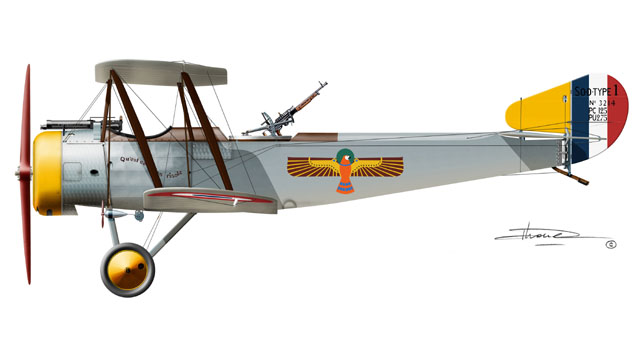
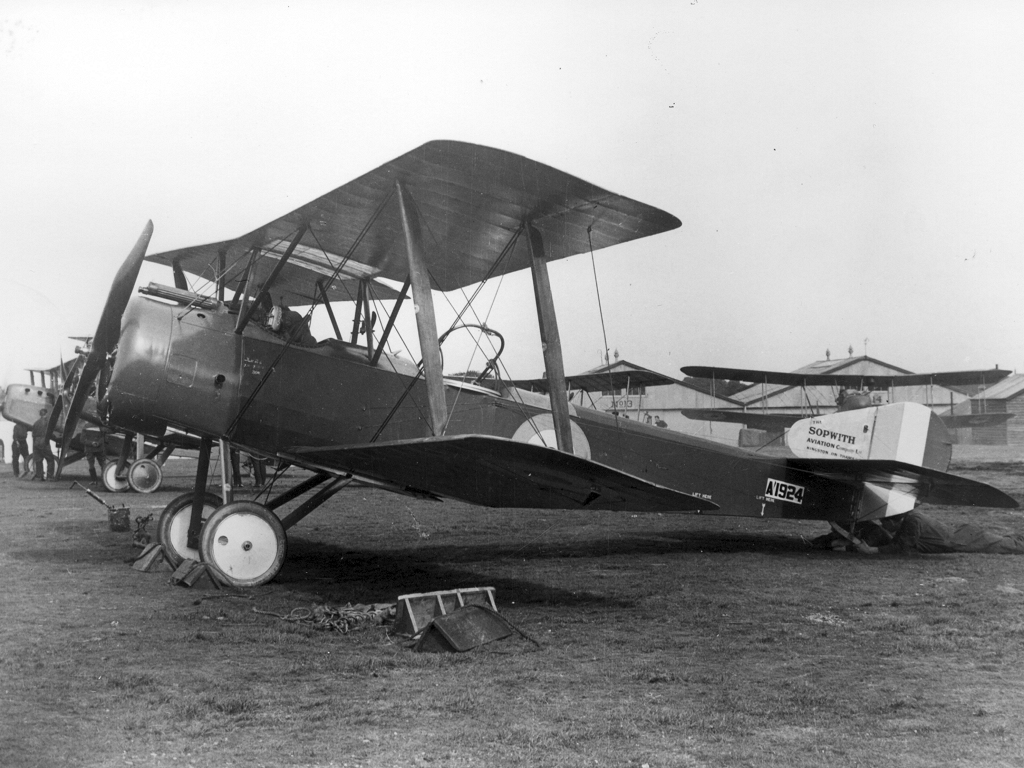
The Sopwith 1½ 'Strutter'

Arthur's first operational posting after a interlude instructing at Montrose was to 70 Squadron during 1916. Rapid promotion facilitated by losses found him still flying the Strutter but as a flight commander with 45 Squadron. This 'fill-in' was tacked onto the end of his tour and he returned to the UK exhausted to rejoin the flying training system.

Reflections on the 'Stutter' from that superb organisation, The Memorial Flight Association at La Ferte Alais who restored this magnificent example to the air.

Copyright  ©The Memorial Flight Association


A handsome but frail-looking biplane powered by a 110 (later 130) h.p. Clerget rotary engine, the Sopwith Two-Seater or Type 9400, to give the respective R.F.C. and R.N.A.S. designations, was produced in December 1915. It was soon given the name 1½ 'Strutter', a reference to its oddly shaped centre-section struts.
An unusual features of its design was the provision of air-brakes in the trailing-edges of the lower wing-roots and a tailplane.

"Airbrakes are used to land on exiguous fields. Operate this device only if you are familiar with the aircraft. The Sopwith aircraft float a lot, therefore it is required to train on large airfields.
To land, glide down with engine in idle, and at approximately 50 meters, increase speed by diving, then raise the airbrakes progressively by rotating the wheel drive ( no needs to release the brake on the wheel as it works only to prevent the airbrakes from lowering due to the airflow)
Aircraft vibrates a little at this moment and seems to sink, dive more and pull up when the aircraft is close to the ground, touch tail first. In these conditions, the aircraft should not roll more than 20 meters.
This landing method requires a consequent training, keep in mind that actuating airbrakes reduce aircraft glide in very large proportions."
The 'Strutter' was the first British aeroplane to go into action with a synchronized Vickers gun for the pilot. The observer's gun was initially set to a Scarff pillar mounting, later on a Nieuport ring and finally on the vastly superior Scarff ring. The 'Strutter' did well as a two-seater fighter/reconnaissance type during the late summer and autumn of 1916. It also was also employed as a bomber, particularly by the R.N.A.S. who developed a single-seat, long-range version.

Copyright: Public Domain

 
The 'Strutter' went to France during 1916 and compared with the Farmans and Breguet-Michelins which formed the main body of the force, they represented a technological advance prompting our French allies to decide to build the type in quantity. Unfortunately production was very slow, by the time the first French Sopwiths reached the front in April 1917 they were  obsolescent.

There were three versions, the SOP. 1 A2 (corps two-seater), the SOP.l B2 (two-seater bomber) and the SOP. Bl (single-seater bomber). Various engines were installed; the 110, 130 and 135 h.p. Clergets, the 80, 110 and 130 h.p. Le Rhones.
Throughout the summer and autumn of 1917 the Sopwiths equipped most of the French day-bombing escadrilles but were hampered by an small available bomb-load and relatively poor performance when matched against newer types.

The Corps d' Armee version was more useful, but as one pilot said wistfully, "the Sopwith is a good tourer, no war-plane!" The type was withdrawn from the Western Front early in 1918 and used as an operational trainer both in the UK and France.

Edited from the original.


Thursday, 13 March 2014

'The Spring Offensive' slips to the Autumn

Well, we had it in mind to pop across to France to visit the air and land-space of the drama along with the last resting places of the central characters within our story. Sadly I had a mishap, 'ended up having an operation and the subsequent rehab and further investigations have made the trip impractical. My stoic allies, though inconvenienced, have sportingly agreed not to go without me. We have realigned our  sights on the Autumn - an 'Autumn Offensive' so to speak - where we will try and be as 'inoffensive' as possible.

The research and the writing continues, the project is no less exciting - more so even as we unearth connections from the existing well of enthusiasm and expertise that surrounds the events of 100 years ago.

Messines Ridge - Photograph Mike St Maur Shiel 
See this wonderful image and others at  Western Front Photography

Monday, 3 February 2014

The Learning Curve

I spent an hour chatting to Syd my co-author/researcher yesterday about Arthur’s initial exposure to combat flying. After spending time in the UK, both being trained and immediately afterwards teaching others as a ‘creamy’[1]. We both agree that this consolidation process added massively to his ‘longevity’ and took him from fledgling to comparatively experienced aviator with ability before being exposed to combat.

Syd used to be an RAF (CFS) QFI, I was the civil equivalent. We both remember clearly the impressions formed during and after our own instructors courses back in the day: the way our eyes were opened wide to the complexities of ‘how’ where previously, as pilots we learnt just enough to ‘do’ in the air. A frequent comment from my fellow course members (1975) was ‘how the hell did we manage to stagger around the sky prior to this course?’ Whilst we were engaged in playful banter we all knew the deeper truth behind the self effacing humour.

Beyond the technical achievement that came with understanding how an aircraft flies  would be the craft of moving around safely ‘up there’. Further bonuses arrived for Arthur attached to the opportunity he gained from his students as they took him to the margins of safety with their inept handling as they learned their art. Teaching others is a gift to those wishing to improve, even perfect their own techniques - their craft, it's perhaps the most rapid and effective ways to learn.

To be able to pass on his accumulating knowledge and skill, Arthur would have evolved different ways of presenting individual concepts and techniques to his students, or ‘Huns’ as they called them then. In short, he would have re-visited every corner of his own experience and in the process, turned himself into a rounded, competent aviator.

  1. A newly trained pilot selected (‘creamed off’) after training to immediately become a flying instructor.  ↩


Arthur's arrival in France during July 1916 blasted him into an entirely new world. Fortunately his hand contained these aforementioned cards, his developed understanding of flight and the confidence this gave him. Any veil of naivety normally present in a pilot fresh from training would have been wiped away by his duties as a flight commander which included clearing up the aftermath of numerous 'smashes', dealing with the fallout of injury and death close up. His letters document plenty of that, but even the exuberance and confidence of youth married to some early military experience would have been unlikely to shield him completely: but the hardening process had started.

So to recap, we are discussing the elements of preparedness for combat, the very structure of what has become to be known as Situational Awareness (SA).  As is well documented and even understood at the time, flight training was rudimentary and largely ineffective until late 1917 when Smith Barry turned that world on its head. A victory for the power of vicarious learning as these lads, initially at least, probably learnt more from their aircraft and each other than they did from some instructors.That has changed with time of course, but we possibly still don't fully appreciate how much the environment and others are responsible for the learning we absorb. The majority lived through the initial learning experience... just.

Without wishing to dwell on accidents...

These factors in turn led to a critical period in the life of new arrivals at the Front, they were either lucky in their leaders and the prevailing circumstances, caught on very quickly or died equally so.
Squadron and Flight Commanders tried hard to ensure that their new boys were up to the job but often they were hard pressed in the extreme themselves to maintain unit strength and at times of great demand had little choice but to use replacements immediately. Poorly selected and trained pilots damaged aircraft and were a liability in the air and constituted a waste of life and resources. They were generally either returned to the UK for further training or posted back to their parent or other units.
Keeping new boys on our side of the line for a while to learn the rudiments of combat flying, build confidence and gather the threads to generate or strengthen their SA was key to their survival and everyone knew it. Yes, Arthur started war flying with a head start but it was what he did following that made the man.

70 Squadron Sopwith 'Strutter'

Thursday, 19 December 2013

Transcription

A major challenge that comes with delving into private, hand-written letters is the process of transcription. Arthur's letters home, dashed out in pencil between trips within earshot of the war at the 'Front, are infused with character.
Working across the collection with my 'Timewheel' I can see his handwriting style varying - shaped by the stress of battle and later, responsibility. Exposure to a particular 'hand' enables the transcriber to read what to the unfamiliar eye would be an indecipherable scrawl. Arthur was no scholar, his punctuation was often non-existent, but what he managed to place between the lines remains in place for us to interpret. At times it's as though we are reaching out across the last century toward each other - 'only just failing to touch. It's a remarkable feeling - quite a privilege.

May 1st, 1917
"I haven’t worked today. I have written quite a few letters, I don’t know if you have got them. I haven’t had any from England yet. The weather has been simply beautiful, much too beautiful for now.  We’re very close to the line here and see a lot of interesting things. I landed rather near the line today and was told that a house just next door had been blown up a few minutes before so I hopped into my machine and skidaddled as quick as I could. I am just about to have dinner it being 8 o’clock and I haven’t had any food since breakfast.
Love to all from Arthur"

Friday, 21 June 2013

Arthur - the work continues

Careful transcribing and research is slowly bringing the underlying truth to the surface as it would from the tip of the archaeologist's trowel. The process is a fascinating one, so much is there to be found if only you know enough of where it hides. On this journey you meet fellow time travelers, those investing large tracts of their lives rustling through the often priceless detritus left for us to find with a sharp eye and analytical mind.

Flying has always been a huge adventure for pilots, never more than in its early years where danger lay at the surface facing them every day.  Crashes, whilst often survivable due to low mass and the frangibility of the machines, were very frequent. Protection for the pilot was minimal and entanglement in cartwheeling wreckage often involved hideous injuries. The attrition rate among those learning to fly from those who could barely manage the feat themselves was grievous.
As flying training establishments flowered across the United Kingdom and far into the Empire, the casualty rates rocketed. At the end of hostilities it was estimated that we had lost more young men to accidents and training than we had to the conflict.

The figure commonly bandied about is around 14,000+ total flight crew casualties, some 8000 or more to non combat losses. These numbers have been disputed having appeared in one biography and cited without confirmation. Another more scholarly figure puts the losses during training 1914-1918 at nerer 2000, still appaling by any measure but considerbly fewer than the former [looking for the reference].

During 1916 Major Robert Smith-Barry found this situation intolerable. This eccentric, deeply intelligent aviator decided to do something about it. Had he failed to convince the GOC RFC Hugh Trenchard that there was a better, more considered way to conduct flying training, it is likely that we would have lost many, many more before the truth and a better way dawned. Smith Barry transformed flying training into a relatively safe process by schooling instructors in his personally evolved techniques, he made it possible to turn callow youths without a clue into aviators whilst keeping the vast majority alive.


Like many of his compatriots Arthur Keen returned from the Front to Home Establishment (the UK) to recuperate from the stress and fatigue of combat. During the interval at home it was normal for returnees to be used as flying instructors to bring along their replacements. Until the sweeping changes brought about by Smith Barry were introduced, tutoring the 'Huns' (as they called them) was a dangerous and low status job. One often loathed by exhausted young men who, having survived the tumult over France and Belgium, felt ill inclined to be sent to their maker by those resembling themselves months earlier. 
In this light it's hardly surprising that instruction was often very poor. Students typically spent little time actually handling the flying controls before staggering into the air themselves for the first time in grossly underpowered aircraft of pitiful performance and dubious handling characteristics. Where these aircraft still exist either in original or replica form they are generally flown by the very well qualified (often test pilots) to ensure their continued existence and keep insurance rates tolerable.


Captain Albert Ball presents us with a fine example here of the flowering, emergent aviator. He completed his service training on the 29th January 1916 and was immediately posted to Gosport arriving on 31st of that month. He took up duties as a flying instructor with 22 Squadron and wrote in a letter home on the 6th February "... thirty officers up for instruction, and out of thirty, six off solo..." and all in a single day (Bowyer, 1977. p.49). This was quick work indeed even for the time, we would love to know how many survived the experience.
Ball scribbled a short note home on the 17th February prior to embarking for France. In the early years of the RFC, if you were a 'brevetted' pilot you knew how to fly and could therefore (of course) teach others to do the same.

A large part of Arthur's story is entwined in the drama surrounding flying training. It is clear from the material that he was a talented pilot, what also emerges is the picture of the committed instructor. Someone who graduated from Smith-Barry's earlier Gosport instructor courses with 'a final assessment exceeding all who had gone before' (a statement taken from one of his letters that we hope to establish evidence for one day). What he might have done post conflict with that talent will never be known but he was spotted by those structuring the new Royal Air Force and given attractive options, one that he took, the rest he left behind to return to 40 Squadron at Bruay/Bryass, this time as its commanding officer.


40 Squadron Nieuport
Reference
Bowyer, C. (1977) Albert Ball VC, Manchester, Crecy Publishing Ltd.

Tuesday, 9 October 2012

Shuttleworth - 7th October 2012

..

An adjusted post from the The Digital Aviator to kick off.

'Had a superb day at Old Warden watching the The Shuttleworth Collection's last display day of the season. The major objective of the day was to bring together all the members of the team with an interest in Arthur's story. Piers, Andrew and Rupert (Dent) were all there along with my friend, colleague and co-researcher, Syd Buxton. Syd spent part of the day with Tony Blackman at a book signing wedged into a chair gripping a pen whilst recounting his very interesting past.

The good news for us was that the SE5a, a Wolseley (Viper V8) engined model that we hoped to photograph, was to fly. Along with the Bristol Fighter, the Sopwith Pup and Triplane, this classic of the conflict on the Western Front was flown beautifully in the early evening light.

 Earlier, whilst the show was in its opening moments Andrew had bumped into a young lady called Tracey Curtis-Taylor, an Old Warden based pilot who was utterly charming and made us feel very welcome. After hearing Arthur's story and looking into his tin chest she swept us into a privileged position near the control tower and introduced us to the guys flying the display. A lucky break for us....


When the SE' returned to earth we were escorted 'up close and personal' to shoot take photographs and try a little alchemy. History takes on an immediacy when one of the principal actors comes alive in front of you, being so close to this living, breathing machine dripping hot oil fresh from flight leaves you on something of a high.

Syd and I returned to my car parked on the flight line and divided up the photographic and written archive of Arthur's life. We have now gone our separate ways to pore forensically through the evidence, record, scan and collaborate on-line. When I last saw the material I gained an impression of the depth of detail available to us; after working more closely with it I now fully realise that the task is deliciously vast.
All of the data will be arranged, appended to a time-line and integrated with other information we have from sources that reach from The RAF Central Flying School through to the principal UK museums dealing with the first great War in the Air. When we see clearly what we have, how it all relates and in turn what it reveals about the man and his time, the story that we want to tell will emerge.

Then the writing begins...


Friday, 27 July 2012

The flower of British Youth

I finished Arthur Rhys Davids story a little while back and have had time to reflect on the tale and all within it. And what a story it is; a peculiar character viewed through today's eyes. Shaped by what looks like a cloistered early life and a rumbustious, demanding schooling at the hands of Eton's masters, Arthur made it easily through flying training to the Western Front to discover his métier - combat flying. He admits to hating the killing and longing to return to the academic world, his first love. It's clear he didn't make friends easily, from the texts this seems to be through choice as he had little time for light banter and the normal run of a fighter pilot's social activity. He was nearer to Ball in this respect I think, though Ball was no academic.
I admire Arthur for his ability to adapt to his surroundings, his obvious courage and sense of duty. I think he would have made a fascinating guest at a small, well chosen dinner table. What a shame that like so many of his contemporaries, he didn't make that dinner gong, nor return to the classics, his first and enduring love. He could have said and done so much more...  Perhaps we should leave regret behind, Cecil Lewis in the company of notable others told their story and left an exquisite record for us all.

Arthur died on October 12th 1917 and has no known grave. He was 'almost certainly shot down by Leutnant Karl Gallwitz, at the time acting Staffelführer of Jasta Boelke' (Revell, 2010). He returned to earth within an area later heavily shelled and fought across during the battles for Passchendaele Ridge.

A scrimmage in a Border Station
A canter down some dark defile
Two thousand pounds of education
Drops to a ten-rupee jezail.

                      Rudyard Kipling

Reference

Revell, A (1984) Brief Glory, the life of Arthur Rhys Davids, DSO MC, William Kimber & Co, London.

Saturday, 14 July 2012

Rarified Atmosphere

It has always struck me how our impressions and visualizations of the history of war are coloured by the media that recorded it and the attitudes of those who wrote it. The Great War was, to all intents and purposes, fought in black and white running at 1.25 the speed of reality. What is sometimes difficult to appreciate given the power of this media, is that all wars are fought in Technicolor and full surround-sound with no volume control. Hot is hot, cold is cold and tortured spinning steel has no respect for rank, title or script - as there isn’t one. To get the full benefit and understand it at a visceral level, you had to be there really, which in our case is impossible. Enough of the obvious.

 I am reading Alex Revell's brilliantly researched history of 56 Squadron (Revell, 1995) and his story of the short life of Arthur Rhys Davids, the scholastic RFC SE5a ace who flew with '56' during 1917. All this as background work for a closer look at Arthur Keen about whom little has been written.

Wednesday, 27 June 2012

A note from another place.

Word in a short while ago from a very knowledgeable follower of the story concerning the Spads.
Norman,
The Spads in the photo. On 29th May 1917, 40 Sqdn were based at Bruay and stayed there until 4th June 1918.
In February 1917, 23 Sqdn were re-equipped with Spad VIIs and on 29th May 1917 moved to - guess where - Bruay, staying till 13th June 1917. Interesting?. Unless you have other clues in the material, I would say that the Spads in the photo are of 23 Sqdn. Bruay is slightly south- east of Béthune.
Cheers Alex


Keen's Map

Arthur is still very much with us. Flying open cockpit aircraft always bought new skills and techniques such as pasting a chart to a piece of thin marine plywood. All that to save a blurred flash as your chart gets whipped away by the slipstream during aerobatics.
Some of Arthur's aero's would may have been inspired by sheer exuberance, but the majority probably came from just trying to stay alive. Here is the remnants of his effort after a bullet smashed it during combat.
The Story of the 'hole'.
map_board1.JPG148.jpg
See The Memorial Flight to look at a very fine SE5a restoration.
Perhaps the best WW1 aircraft restoration website on the web - is there a company anywhere that restores or reconstructs WW1 aircraft better than The Vintage Aviator Ltd?

Time Travel

'Research' for me is a word that evokes stuffiness, bookish tendencies and frankly, a dry as dust well where the spirits sink. At least that was the case until I started doing a little digging myself, it seems quite different now as the mud and metal of Flanders and Arras edge closer.
Keen group3
Left: Capt PCO Riddell (Recording Officer) Centre: Unknown, possibly Padre Keymer, Right: Capt AW Keen

Aviator in the Attic - 3

After relative silence on the subject for a while we seem to have hatched a plan for next year. The proposal is that we three interested parties (Piers, Whitters and yours truly) go across to France during a 'Spring Offensive' to visit the airfields that Arthur flew from with 40 Squadron until the time of his parting.
These airfields include amongst others, Bruay and Bryas. Not much left of the former sadly... We are doing the research as part of the ongoing project into this chapter of Arthur's life and it is proving to be enduringly fascinating. The forum members of The Aerodrome.com and Cross & Cockade have been generous with information and advise during the early stages of the research.
Earlier Post 1 2 3.


Aviator in the Attic - 2


I have now had a good look at the material in Arthur's field letter case (the tin box) and it is quite a trove. His MC is there along with other awards and a ton of letters, photographs and papers. Some of his personal effects are quite amazing. For instance, a tubular silver case for just one cigarette with a lighter in one end and a compass at the other. One for smoking in a field whilst waiting to be picked up by the squadron Crossley Tender after the engine stops... or worse. The sense of immediacy is amazing, it's like breathing in pure history - a snapshot of someones life. As Piers and I rooted carefully through the contents we were simply bowled over by the story, most of it yet to unfold.

Note: The Spad above was part of a lineup shown in other pictures in the box. Either the British squadron was co-located, they were visitors, or perhaps Arthur grabbed his camera and popped across for a drink with the French/Americans. I don't think the RFC/RAF operated the aircraft; it shouldn't be difficult to place such a distinctively marked aircraft squadron. 

*It seems that I (we) will now be writing the book with Piers as Head Researcher and Archivist.We have also been joined by Richard and Syd, both motivated and tenacious researchers - and aviators to the core!

The Aviator in the Attic - 1


Piers is a good friend, an aviator descended from a long line of fliers with a keen sense of history . Like many of us he has held a lifelong fascination with all things that make their way around 'up there' be they avian, human or wood and fabric.  Across the last seven years we have shared our interests across Skype while I am away down-route.

Back to the 'long line of fliers: It seems that and one of Piers' ancestors left us  a time capsule. A regulation-sized tin box had  emerged from a family attic during a house sale, it contained the personal effects of a fighter pilot from the Great War, a youthful great uncle, Arthur Keen.  The tin box had probably remained sealed since just after the war when it and consigned to the attic. The key, having been placed in a safe place went the way of many such, other means were used to gain entry.